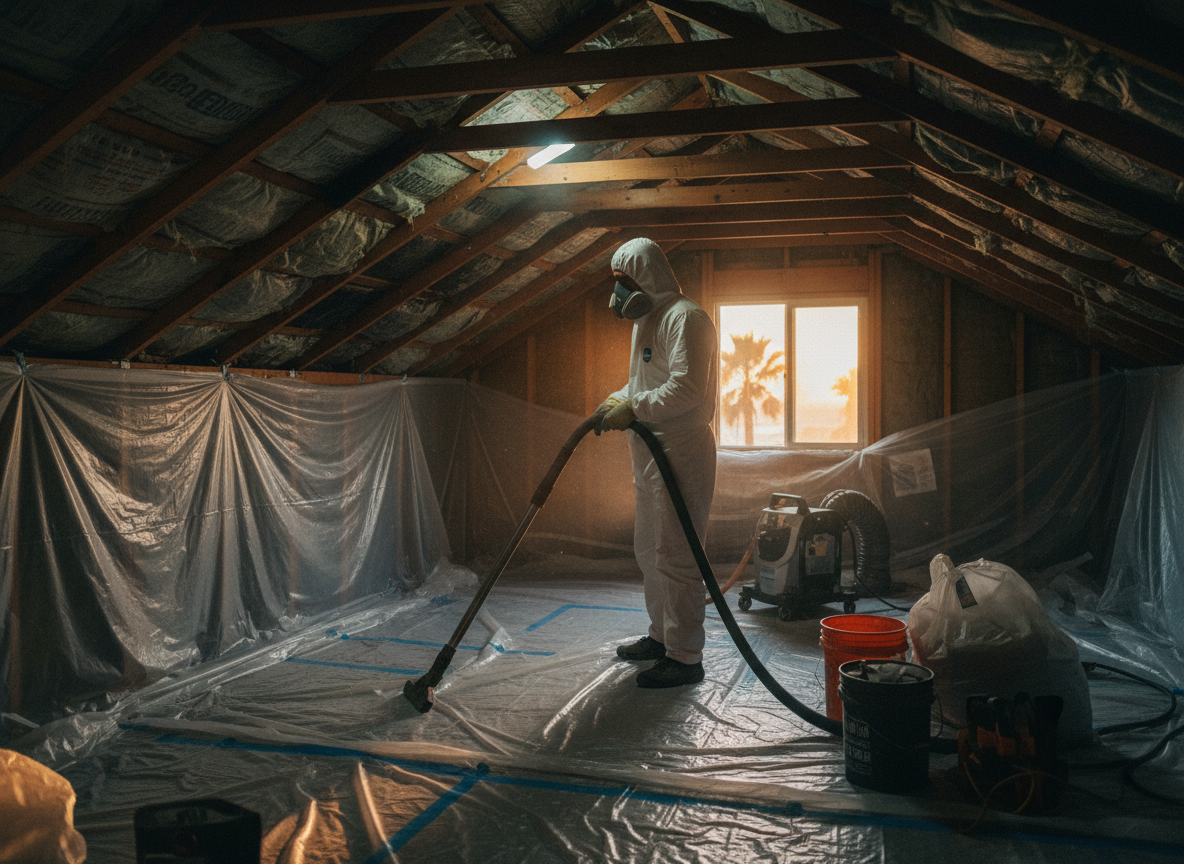
Sunset Beach sits on a narrow strip between the Pacific and the wetlands, where the daily marine layer pushes cool moist air under roof decks. Older single-story homes and 1960s beach cottages common here often lack ridge vents or have fiberglass batts that trap that moisture against plywood sheathing. Once relative humidity in the attic stays above 60 percent for weeks, mold colonies form on the underside of the roof and on ceiling joists. Remediation crews must first isolate the space with plastic sheeting sealed at every penetration, then remove saturated insulation without disturbing asbestos-containing vermiculite that still exists in some pre-1980 attics.
After physical removal, HEPA vacuuming and antimicrobial treatment follow, but the real variable is ventilation correction. Many homes back up to the channel in Seal Beach or face the surf in Huntington Beach and have gable-end vents that corrode shut from salt air. Adding or replacing those vents while maintaining the required net free area keeps future moisture from re-accumulating. Crews also check bathroom and kitchen exhaust fans that terminate inside the attic instead of through the roof, a frequent source of the humidity that starts the cycle.
Edge cases include mold that has crossed into wall cavities through recessed light cans or HVAC returns. In those situations, small inspection openings are cut, the cavity is dried with directed air movers, and the drywall is replaced only after moisture readings drop below 12 percent. Orange County code requires that any work disturbing more than 10 square feet of mold-affected material be documented, so photos and moisture logs stay with the job file for the homeowner’s insurance carrier.
Technician insight
In Sunset Beach the thing that catches most people out with attic mold remediation is the marine layer that sits on the roof every morning. Older homes along Pacific Coast Highway have single-layer roof decks with almost no airflow, so even a small bathroom fan dumping into the attic keeps humidity high enough for mold to return within a season.
1962 Bungalow Off Anderson Street
Homeowner noticed musty smell after an unusually long stretch of morning fog. Inspection found black growth on the north-side rafters and wet cellulose where the bathroom fan terminated inside the attic. Crew removed 18 bags of insulation, rerouted the fan through the roof, added two new gable vents, and treated the sheathing. Moisture dropped to 11 percent; new insulation went in two days later with no recurrence after the next marine layer.
Attic Mold Remediation Services We Offer
✓Attic Insulation Removal
Pulls out wet or contaminated fiberglass and cellulose so hidden mold on sheathing can be reached and treated without leaving spores behind.
✓Marine Layer Ventilation Upgrade
Adds or repairs ridge, soffit, and gable vents sized for Sunset Beach wind patterns to keep attic humidity below the threshold that supports mold.
✓Bath Exhaust Fan Reroute
Moves improperly terminated bathroom and dryer vents through the roof instead of into the attic, eliminating a primary moisture source in coastal homes.
✓HEPA Containment and Removal
Sets up negative-air containment around attic access points then removes visible mold colonies from rafters, trusses, and sheathing using HEPA filtration.
✓Post Remediation Moisture Mapping
Uses pin and pinless meters plus thermal imaging to confirm every joist and panel has returned to ambient dryness before new insulation is installed.
Attic Mold Remediation Cost in SUNSET BEACH, CA
| Service | Typical Range | What Affects It |
|---|---|---|
| Attic Inspection And Report | $250–$450 | Includes moisture mapping and photos; larger or multi-access attics cost more. |
| Insulation Removal And Disposal | $600–$1,400 | Depends on depth of insulation and whether it contains vermiculite. |
| Mold Treatment And HEPA Cleaning | $800–$2,200 | Square footage of growth and number of rafter bays drive the range. |
| Ventilation Upgrade | $400–$900 | New ridge vent plus intake repairs typical for older beach cottages. |
Ranges are typical for SUNSET BEACH, CA and confirmed with an exact written quote before any work starts.
How it works
- 1
Inspection And Containment
Technician climbs into the attic from Sunset Beach access points, maps visible growth, and seals the space with 6-mil poly to protect living areas below.
- 2
Removal And Cleaning
Saturated insulation is bagged and removed; mold on wood is wire-brushed and HEPA-vacuumed, then treated with EPA-registered antimicrobial.
- 3
Drying And Ventilation Fix
Air movers and dehumidifiers run until readings hit 12 percent or lower; corroded vents are replaced to match local marine exposure.
- 4
Verification And Rebuild
Independent moisture logs and photos are recorded; new insulation is installed only after clearance, then access is restored.
Pricing
Most Sunset Beach attic jobs fall between a few hundred dollars for inspection and several thousand when insulation removal and ventilation work are required.